Watercolor Green Spots and Floral Contours: A Practical Asset for Summer Design
In the evolving landscape of digital design, the demand for authentic, hand-crafted elements continues to rise. Consumers and clients alike are moving away from sterile, overly polished graphics in favor of textures that convey warmth and organic imperfection. This shift has placed watercolor green spots and delicate floral contours at the forefront of seasonal design trends, particularly for summer-themed projects. These assets are not merely decorative; they serve as foundational building blocks for creators who need versatility without sacrificing artistic integrity.
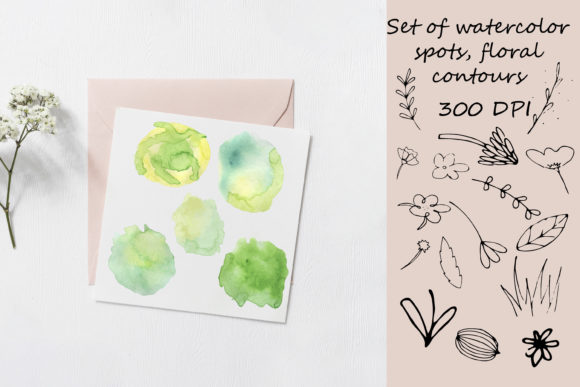
For professionals ranging from graphic designers and marketers to small business owners and serious hobbyists, understanding the utility of these specific design elements is crucial. The collection in question offers a curated mix of hand-drawn herbs, watercolor splashes, and line-art florals, provided in multiple formats to ensure compatibility across various workflows. This analysis explores the practical value, technical specifications, and real-world applications of such a resource, helping you determine if it aligns with your creative objectives.
The Aesthetic Appeal of Organic Imperfection
The core strength of watercolor green spots and floral contours lies in their ability to mimic natural media. Digital tools often struggle to replicate the unpredictable bleed of watercolor paint or the slight hesitation of a hand-drawn line. High-quality assets bridge this gap by providing pre-rendered elements that retain the charm of traditional art while offering the convenience of digital manipulation.
Green, as a dominant hue, evokes feelings of freshness, growth, and tranquility. When paired with the structural elegance of floral outlines, it creates a visual balance between chaos and order. The "summer printed" aesthetic referenced in many contemporary collections leverages this combination to produce designs that feel light, airy, and inviting. For brands aiming to project an eco-friendly, artisanal, or relaxed image, these elements are indispensable. They allow for the creation of visuals that feel personal and crafted, rather than mass-produced.
Technical Specifications and File Versatility
A design asset is only as useful as its technical flexibility. A robust collection of watercolor green spots and floral contours must cater to both print and digital mediums. The ideal package includes a variety of file formats, each serving a distinct purpose in the design workflow.
- Vector EPS Files: These are essential for scalability. Whether you are designing a small business card or a large-format banner, vector files ensure that lines remain crisp and colors stay solid without pixelation. Having at least 4-5 megapixels of resolution in the source files guarantees that even when rasterized for specific uses, the quality remains high.
- PNG Files with Transparent Backgrounds: At 300 dpi, these files are the workhorses of digital composition. The transparent background allows designers to layer watercolor spots over photographs, text, or other graphics without the need for complex masking. This is particularly valuable for creating composite images for social media or web headers.
- JPEG Files with White Backgrounds: While less flexible than PNGs, high-resolution JPEGs (300 dpi) are universally compatible and ideal for quick previews or projects where transparency is not required. They are also suitable for direct printing in certain contexts where the white background acts as a deliberate design choice.
The inclusion of both 16 doodle herb illustrations and 5 watercolor spots provides a balanced toolkit. The herbs offer detailed, recognizable shapes that can serve as focal points, while the watercolor spots provide abstract texture and depth. This combination allows for the creation of complex compositions from simple components.
Practical Applications Across Industries
The versatility of watercolor green spots and floral contours extends far beyond static graphic design. Their adaptability makes them suitable for a wide range of physical and digital products. Understanding these applications can help creators maximize the return on investment for such assets.
Product Design and Merchandising
For entrepreneurs and small business owners, these assets are ideal for print-on-demand services. The organic nature of watercolor blends seamlessly with fabrics and hard surfaces. Consider the following applications:
- Apparel: T-shirts and tote bags benefit from the soft edges of watercolor, which do not appear harsh against textile fibers.
- Home Goods: Pillows, towels, and mugs can feature these patterns to create a calming, nature-inspired atmosphere in living spaces.
- Accessories: Skateboards and helmets offer a unique canvas where the contrast between rugged utility and delicate floral art creates a striking visual juxtaposition.
Crafting and Physical Ornamentation
Beyond printing, these designs are highly effective for cutting machines used in crafting. The clear lines of the floral contours and distinct shapes of the doodle herbs can be easily traced and cut from wood, plastic, or paper. This opens up possibilities for creating physical ornaments, wedding decorations, or custom signage. The ability to color these cutouts with pencils or brushes adds an interactive, DIY element that appeals to the handmade market.
Digital Branding and Stationery
Marketers and bloggers can utilize these elements to create cohesive brand identities. By integrating watercolor green spots into logos, letterheads, and social media templates, businesses can establish a consistent visual language. The assets can be recolored using software like Adobe Illustrator or Photoshop to match specific brand palettes, ensuring that the organic feel remains while adhering to corporate guidelines.
Workflow Integration and Customization
One of the most significant advantages of this type of asset pack is the ease of integration into existing workflows. For users of Adobe Creative Cloud, the PNG and EPS files drop directly into Photoshop and Illustrator projects. The transparency of the PNGs saves hours of manual editing, allowing designers to focus on composition rather than cleanup.
Furthermore, the modularity of the collection encourages experimentation. Designers can combine the 16 doodle herb elements with the 5 watercolor spots to create unique patterns. By rotating, scaling, and recoloring these individual components, one can generate an infinite variety of layouts. This flexibility is crucial for avoiding the "stock photo" look, ensuring that each final product feels bespoke and original.
For those less experienced with professional design software, the JPEG and PNG files are compatible with most consumer-level computer programs. This accessibility democratizes high-quality design, allowing hobbyists and educators to create professional-looking materials for classrooms, personal projects, or community events.
Evaluating Quality and Long-Term Value
When assessing a collection of watercolor green spots and floral contours, several factors determine its long-term value. Resolution is paramount; 300 dpi is the standard for high-quality print, ensuring that details remain sharp even when enlarged. The clarity of the vector paths in EPS files determines how easily the shapes can be modified or scaled.
Consistency in style is another critical indicator of quality. All elements should share a cohesive artistic voice, ensuring that they look like they belong together when combined. A disjointed collection forces designers to spend extra time adjusting styles, reducing efficiency. The hand-drawn nature of the herbs and the fluidity of the watercolor spots should complement each other, creating a harmonious visual experience.
Moreover, the breadth of application contributes to value. An asset pack that serves multiple purposes—printing, cutting, digital branding—offers a higher return on investment than one limited to a single use case. For freelancers and agencies, having a reliable library of such versatile elements can streamline client projects and reduce turnaround times.
Conclusion
Incorporating watercolor green spots and floral contours into your design toolkit offers a practical solution for creating engaging, organic visuals. Whether you are designing summer-themed merchandise, crafting physical ornaments, or building a brand identity, these assets provide the flexibility and quality needed to meet professional standards. By leveraging the diverse file formats and customizable nature of these elements, creators can produce distinctive work that resonates with audiences seeking authenticity and natural beauty. As with any design resource, the key lies in thoughtful application, blending these organic elements with strategic design principles to achieve compelling results.