Autumn Landscapes and Foliage Decoration: A Visual Guide to Seasonal Design
There is a distinct shift in the air when autumn arrives. The light changes, becoming softer and more golden, and the world seems to slow down just enough for us to notice the details. For designers, decorators, and creative professionals, this season offers a rich palette of inspiration. Autumn landscapes and foliage decoration are not merely about capturing the changing leaves; they are about evoking a feeling of warmth, nostalgia, and natural abundance. Whether you are designing a wedding invitation, updating a retail storefront, or creating digital content for social media, understanding how to leverage these seasonal elements can transform your work from ordinary to exceptional.
The appeal of fall aesthetics lies in their versatility. Unlike the stark minimalism of winter or the explosive energy of summer, autumn sits comfortably in a middle ground. It allows for both rustic charm and sophisticated elegance. By incorporating elements like colorful leaves, dried grasses, and berries, you create textures that feel tactile and grounded. This is particularly effective in an increasingly digital world where audiences crave authenticity and connection to nature.
Bridging the Rural and the Modern
One of the most compelling aspects of autumn design is its ability to bridge the gap between rural tradition and modern minimalism. Consider the classic imagery of a rural scene featuring a church, rolling clouds, and autumn trees. This composition tells a story of community and heritage. When used in branding or editorial design, such imagery communicates stability and trust. It suggests that the brand or message is rooted in something enduring.
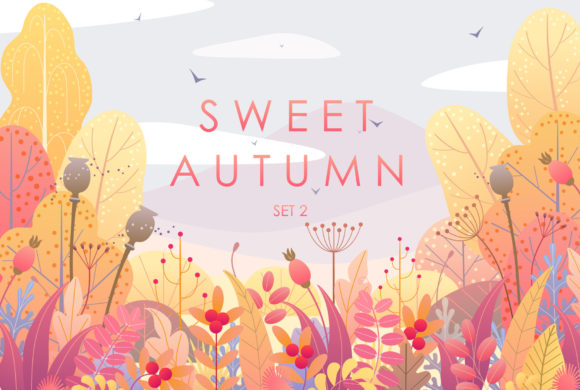
However, modern design trends often favor clean lines and uncluttered spaces. This is where vector flat minimalist illustrations become invaluable. By stripping away excessive detail and focusing on the essential shapes of autumn plants, designers can create visuals that feel contemporary while still honoring the season’s spirit. Flying birds against a backdrop of simple clouds, for instance, add movement and life without overwhelming the viewer. This balance is crucial for industries like tech, finance, or healthcare, where clarity is paramount but a touch of seasonal warmth can humanize the brand.
Practical Applications Across Industries
The utility of high-quality autumn assets extends far beyond personal projects. Various industries can benefit significantly from integrating these themes into their visual strategies.
- Retail and E-commerce: Seasonal promotions rely heavily on visual cues. Using seamless borders and patterns with simple elements of autumn plants can frame product images effectively. These frames draw the eye inward, highlighting the product while establishing a festive context. For example, a horizontal floral background with autumn plants can serve as a banner for a website, instantly signaling a sale or new collection.
- Hospitality and Events: Restaurants and hotels often update their menus and decor to reflect the season. Vector illustrations of dried grass and berries can be used to design menu covers, table cards, or even wall murals. The ability to edit these vector objects separately means that a hotel chain can maintain brand consistency while adapting the color palette to match their specific interior design.
- Publishing and Media: Magazine editors and blog creators constantly seek fresh visuals. An autumn landscape with bushes and flying birds provides a perfect header image for articles related to travel, lifestyle, or wellness. The emotional resonance of these images can increase engagement and time spent on page.
The Advantage of Vector Flexibility
When sourcing or creating Autumn landscapes and foliage decoration, the format matters immensely. Raster images, such as standard JPEGs, have fixed resolutions. If you try to enlarge them for a large-format print, they pixelate and lose quality. Vector files, specifically EPS formats, solve this problem entirely. Because they are based on mathematical paths rather than pixels, they can be scaled infinitely without any loss of clarity.
This flexibility is crucial for professional applications. Imagine you have a beautiful illustration of an autumn tree. You might want to use it as a small icon on a mobile app and later as a large backdrop for a trade show booth. With fully editable vector objects separated and grouped, you can easily adjust the size, color, and composition for each scenario. You are not stuck with a static image; you have a toolkit of elements that can be rearranged to suit your needs.
Furthermore, vector illustrations created using masks allow for precise control over visibility and layering. This technique is particularly useful when creating complex compositions, such as a seamless pattern where leaves overlap in a natural yet orderly fashion. It ensures that the final output looks polished and professional, regardless of the medium.
Choosing the Right Composition
Not all autumn designs are created equal. When selecting assets for your project, consider the orientation and layout that best suits your platform. Square backgrounds are ideal for social media posts, particularly on platforms like Instagram. Horizontal rectangles work well for website headers, email newsletters, and YouTube thumbnails. Vertical formats are perfect for stories, Pinterest pins, and mobile-first designs.
A comprehensive zip archive that includes ten pairs of EPS and JPG files offers significant value. Having both formats ensures compatibility across different software and workflows. The inclusion of three distinct illustrations with autumn landscapes provides variety, preventing your design from looking repetitive. Meanwhile, two seamless borders and two seamless patterns offer endless possibilities for wrapping text or creating background textures.
It is also important to consider the color psychology involved. Autumn is traditionally associated with warm tones—reds, oranges, yellows, and browns. However, incorporating muted greens or soft grays can add sophistication and prevent the design from feeling too cliché. Dried grasses, for example, introduce a neutral element that balances the vibrancy of colorful leaves. Berries add pops of deep red or purple, creating focal points that guide the viewer’s eye through the composition.
Navigating Common Design Challenges
While autumn themes are popular, they can sometimes feel overcrowded or chaotic if not handled carefully. A common mistake is using too many elements at once. A landscape filled with every type of leaf, bird, and cloud can become visually noisy. Minimalist approaches help mitigate this risk by focusing on negative space. By allowing breathing room around the key elements, you create a sense of calm and elegance.
Another consideration is cultural relevance. While autumn is celebrated in many parts of the world, the specific imagery may vary. A rural scene with a church may resonate strongly in certain regions but feel less relevant in others. Understanding your audience’s context helps in choosing the right symbols. For a global audience, universal elements like leaves and birds are safer choices than specific architectural features.
Additionally, ensure that the technical quality of the files meets your production needs. Check that the vector paths are clean and closed, and that the layers are logically named and grouped. This saves time during the editing process and reduces the likelihood of errors when preparing files for print or web export.
Enhancing Creativity with Modular Elements
The true power of modular design lies in its ability to spark creativity. When you have access to separated vector objects, you are no longer limited to pre-made compositions. You can mix and match elements to create something unique. Combine the flying birds from one illustration with the bushes from another. Change the color of the berries to match your brand guidelines. Create a new seamless pattern by rotating and scaling individual leaves.
This level of customization empowers designers to produce original work that stands out in a saturated market. It also allows for rapid iteration. If a client requests a change, you can make adjustments quickly without having to start from scratch. This efficiency is invaluable in fast-paced industries where deadlines are tight and expectations are high.
Ultimately, Autumn landscapes and foliage decoration offer more than just aesthetic appeal. They provide a framework for storytelling, a tool for branding, and a source of creative inspiration. By understanding the practical applications and technical advantages of these resources, you can harness the beauty of the season to enhance your projects and connect with your audience on a deeper level. Whether you are a seasoned designer or a curious enthusiast, exploring these elements opens up a world of possibilities for your creative endeavors.